Allanah's story
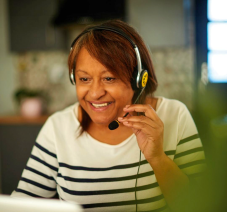 My name is Allanah, I'm a counsellor at What's Up, Barnardos' helpline. After more than 20 years working on helplines, people ask how I keep going. The answer is simple, every time a child reaches out, they are trusting us with something precious. This work matters.
Every shift is different. You pick up a phone call or open a chat window, and you never quite know what a child is going to share. The themes are heartbreakingly consistent — family conflict, self-harm, suicidal thoughts, feeling unseen — but what may look like one issue initially is almost always many. A child might start by saying school is stressful, but underneath might be fear, trauma, or things they've never admitted to anyone.
More children reach out through webchat than by phone now. They tell us it feels safer — more anonymous, more in their control. And I understand why. We know that almost one in four children in Aotearoa are already turning to AI chatbots for emotional support. For many children, typing, rather than speaking, makes hard things feel slightly easier to say.
However, there's a vital difference between a helpline like ours and an AI chatbot. Behind every message to What’s Up is a real person — someone who listens with empathy, can respond if there's concern for safety, work with them to find solutions and who can walk alongside them over time. That kind of human connection can't be replicated by AI.
When Sophia typed only "Hi," I could feel, even through text, that something was heavy.
She talked first about school pressure, wanting to live with her mum full-time. Those were real concerns — but they were only the beginning. As we built that small moment of safety together, Sophia slowly shared the deeper harm she had been carrying since she was nine. Things no child should ever experience.
We moved gently. I assessed her safety. We explored her suicidal thoughts together — what triggered them, what they sounded like. And we talked about self-harm, which so many young people use either to feel something when they feel numb, or to release overwhelming feelings. None of this can be done by an AI chatbot — it requires empathy, judgement, and connection.
Sophia did not reach out again for a few months. That's normal. When you disclose something deeply personal for the first time, it can take weeks to come back. And recently, she has been in touch again.
When she returned, it meant she felt heard and respected. She knew this was a place she could come back to.
That moment – the return – is one of the most powerful things I witness. It means a young person believes change is possible. When they tell you something painful, and you honour it — you acknowledge their importance — that is empowering. Many have never experienced that before.
Every chat, every call, every brave first message is a chance to change a life.
Thank you. It's people like you that make this work possible.
Allanah,
Counsellor, What’s Up.