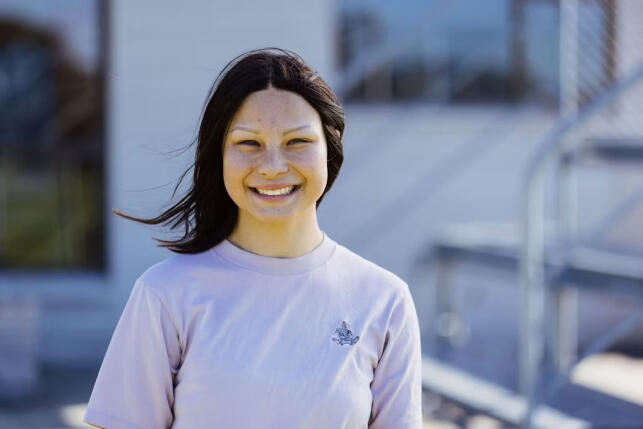
Daphne's story

At 16, Daphne is like many teens — independent, curious, and navigating a world that sometimes feels far bigger than she’s ready for. Between school, friends, and family, she’s also part of the digital generation. Her social life doesn’t end when the school bell rings; it continues online, especially through gaming, where she’s made friends, found laughter, and, occasionally, connection.
It was during one of these online games that Daphne met someone. He was older — 20 — but friendly. They started chatting while playing, and soon the conversations spilled over into messages outside the game. At first, it felt harmless. He was funny, kind, and interested in what she had to say. For about five months, this online friendship became part of her daily routine.
But then things started to shift. He began pressuring her — asking to see her face, pushing for video calls, and, increasingly, making flirtatious comments that made her uncomfortable. Daphne asked him to stop. She tried setting boundaries. But he wouldn’t listen. “Oops, I forgot,” he’d say when she reminded him. It left her feeling uneasy and disrespected.
Daphne was caught in a painful in-between. She didn’t want to lose the connection — they had shared jokes and long chats. But she also didn’t like how he made her feel. She didn’t feel like she could to talk to her parents; she feared being grounded, blamed, or judged. She had confided in her friends, who believed this guy was a predator. Still, she felt unsure. “I think I’m easily persuaded,” she admitted. “And I don’t always trust myself to make the right call.”
Then Daphne called What’s Up.
Over two separate conversations, Daphne opened up to one of our counsellors. With gentle questions and reassurance, the counsellor helped her unpack the tangled web of feelings — the guilt, the fear, the confusion, the flickers of instinct she hadn’t yet learned to fully trust.
The counsellor didn’t tell her what to do. Instead, they explored options together. What might it look like to keep the friendship going? What might it feel like to walk away?
Daphne thought it through. “If I keep talking to him,” she said slowly, “he’ll just keep ignoring my boundaries. Or pretend he forgot again.” Then her voice steadied. “But if I block him… he’s gone. And I’ll have people around me who respect me.”
She paused. And then, finally: “I think I want to block him. That’s the right thing to do.”
The relief in her voice was clear. Not because someone told her what to do — but because she had come to the decision herself. It was her choice. And it felt good.
Daphne hung up that call not just with a plan, but with something more powerful: a sense of self-worth. The knowledge that her voice mattered. That her boundaries were valid. That she could trust herself.
At What’s Up, these are the kinds of conversations our counsellors have every day. Quiet, courageous moments where a young person chooses themselves, sometimes for the first time.
Daphne is one of nearly 13,000 tamariki and rangatahi who contact What’s Up each year. Her story is unique — but the fear, the questions, the need to be heard — that’s something thousands of children share.
Because sometimes, the most powerful thing we can offer a young person is someone who simply listens — and reminds them they already have the strength they need.